2026 •
Jan •
Feb •
Mar •
Apr •
May
2025 •
Jan •
Feb •
Mar •
Apr •
May •
Jun •
Jul •
Aug •
Sep •
Oct •
Nov •
Dec
2024 •
2023 •
2022 •
2021 •
2020 •
2019 •
2011
Smart Home Blog

If you found this page useful you can buy me a coffee. This helps me maintain this website and add more content.
25th December
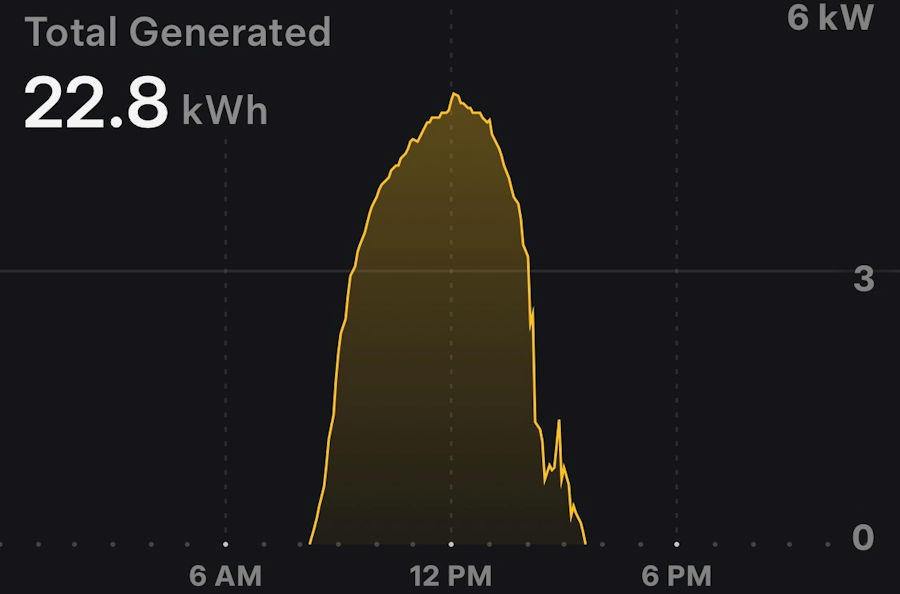
Christmas Day was the sunniest day in December so far 🌞 Since our solar was installed, we have yet to see a day where our generation was zero. December is the worst month of the year but, we are still going to average about 10kWh per day.
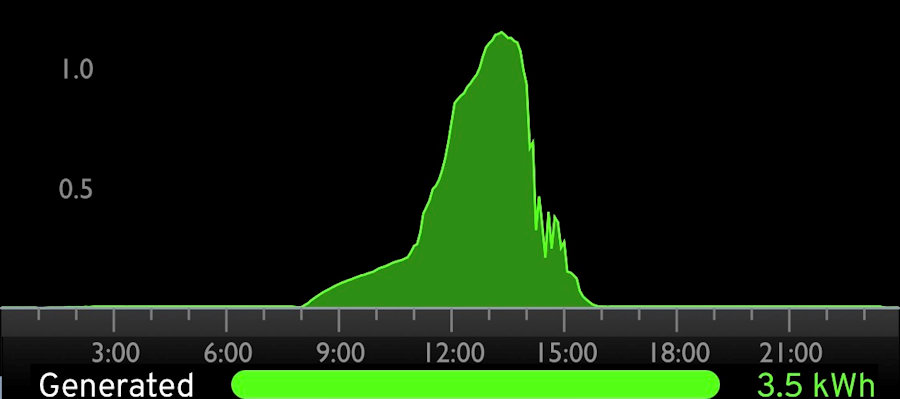
3.5kWh of this total generation was from the extension solar, which is still making a useful contribution in the depths of winter (especially as the sun goes down). This is pretty impressive, as they are on the North side of our house and mostly shaded in winter.
31st December
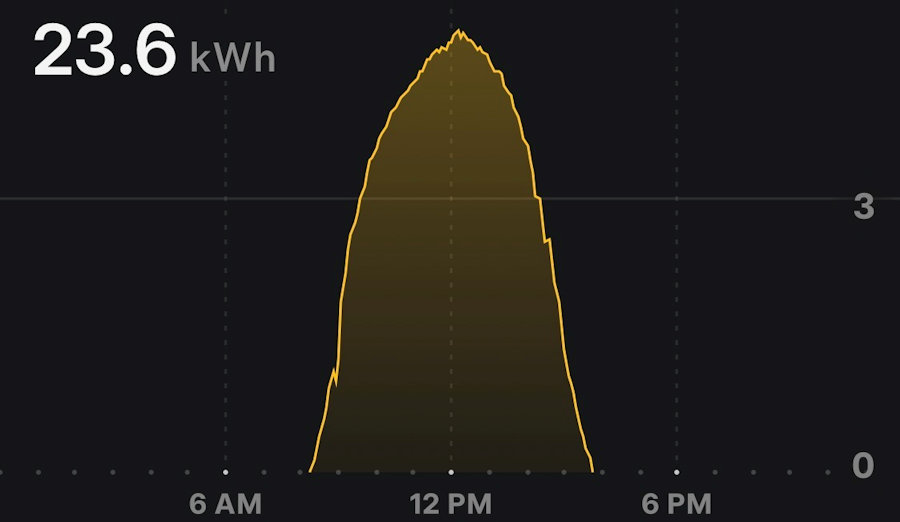
December was a pretty poor month for solar generation but the last day of December has been the best! 23.6kWh generated today, with 4.0kWh of that from the extension solar.
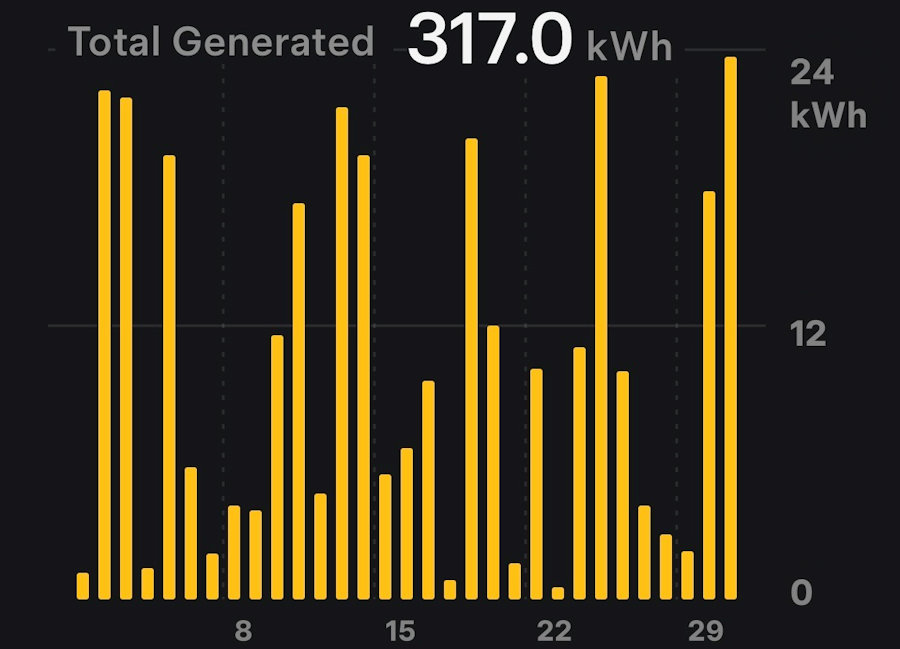
We generated 317kWh in December with 69kWh of that coming from the extension solar.
The extension solar generation meter reading is 2,592kWh and my South facing solar generation meter reading is 23,161kWh at the end of this month and this year.
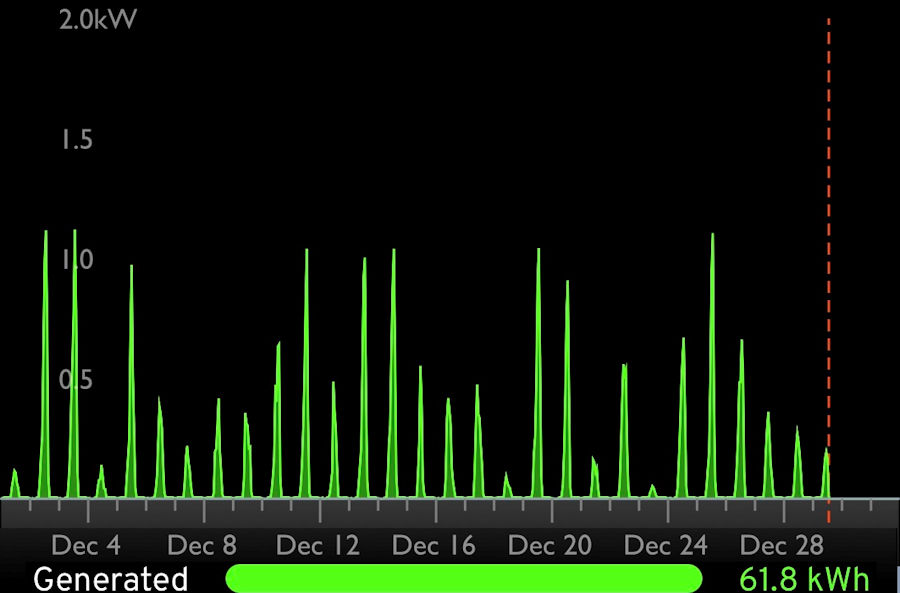
The extension solar generated less than 70kWh but, this is a significant given the total generation. Interestingly, these panels never generated zero either. The lowest was 0.3kWh and on the same day, my south facing solar generated just 0.2kWh.
We imported 630kWh and exported 130kWh. 286kWh of this import went into EVs.
2025
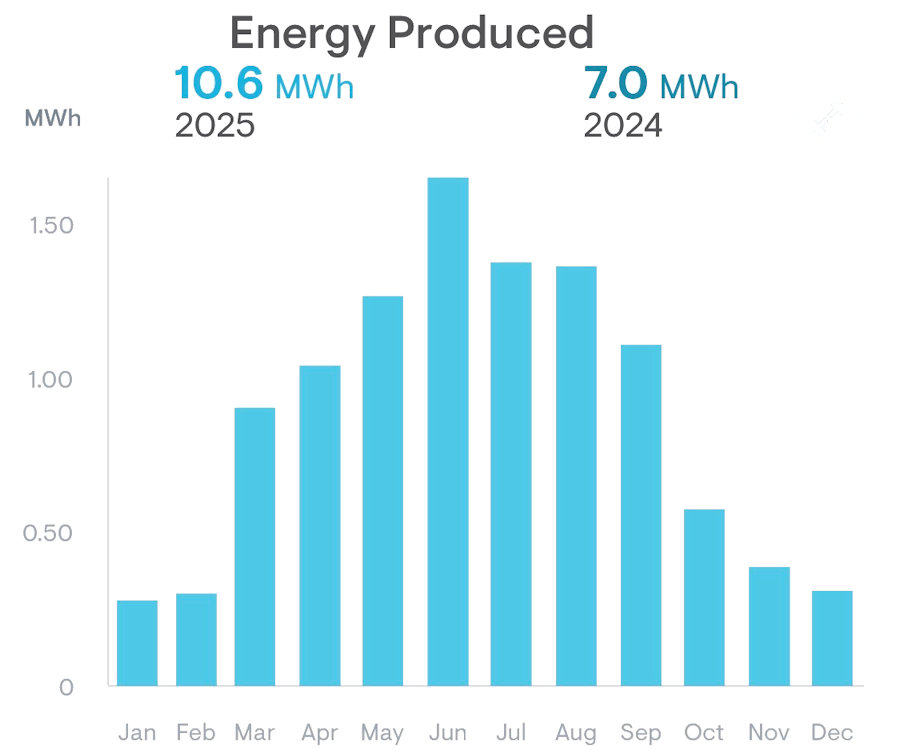
We generated 10.6MWh in 2025, much more than the 7.0MWh we generated in 2024. This is mostly down to the new extension solar that was installed in May. We expect more than 11MWh in 2026. This data is from the Enphase Enlighten app.
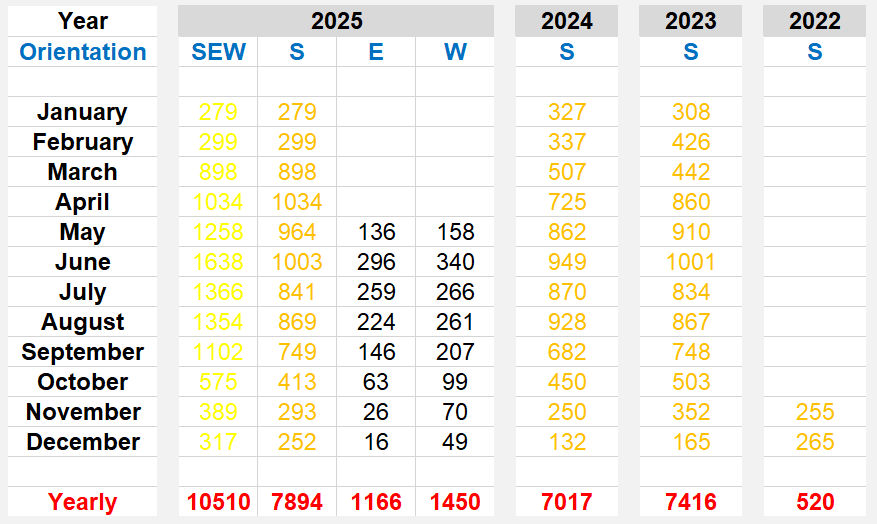
This table shows how 2025 generation has compared with previous months/years. Despite December 2025 being regarded as particularly sunny, my south facing roof generated more in December 2022 but, 2025 was the best generation year so far when comparing our smart home solar installation project only simply because of the spectacularly sunny March and April.
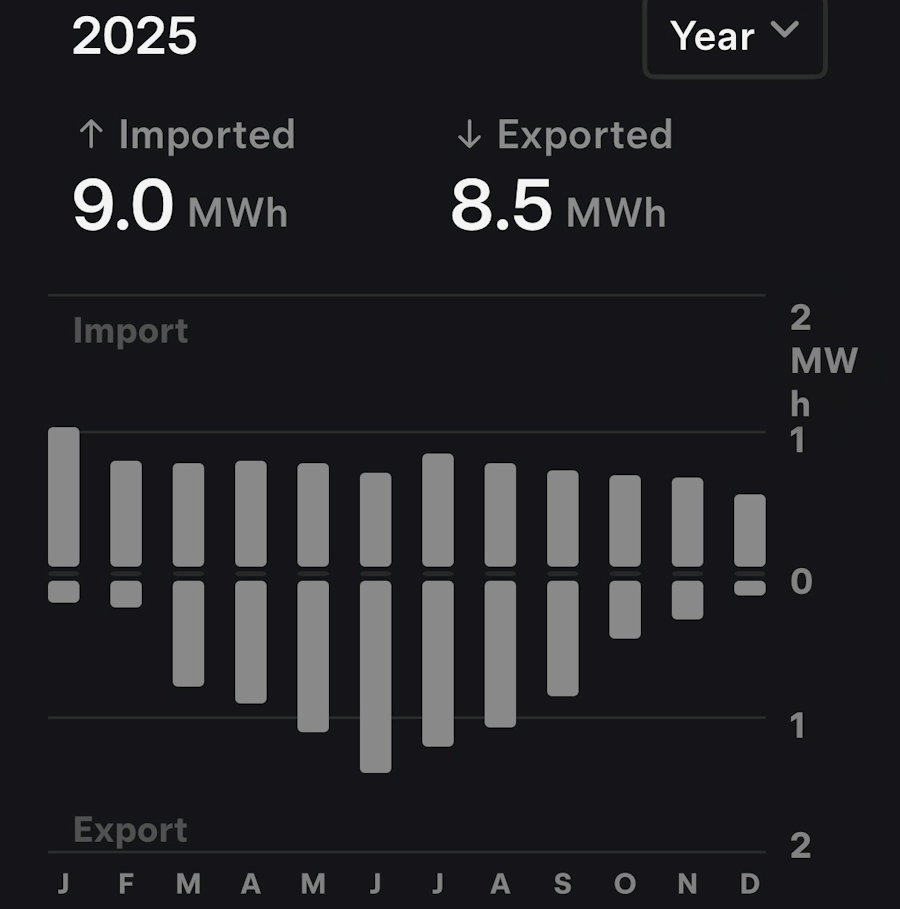
This is an interesting graph from the Tesla Powerwall app. It shows we imported a total of 9.0MWh and >98% of this was on the cheap rate (7p/kWh). We also exported 8.5MWh at 15p/kWh, generating £1275 in income. This more than covered the costs of our electricity (including EV charging), gas and the standing charges over the while year, with Octopus Energy paying us about £200.
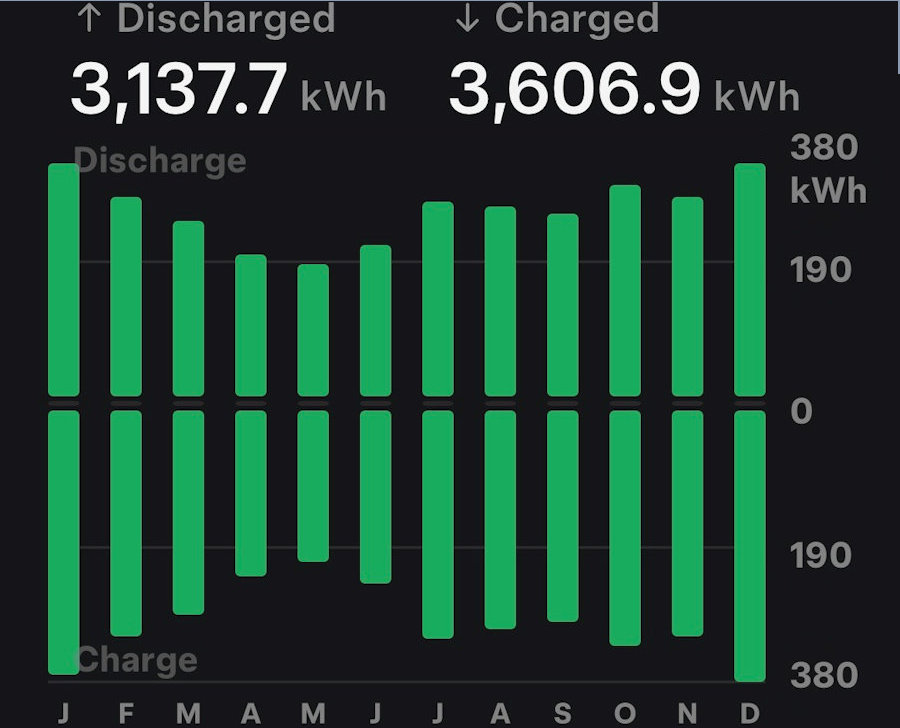
This is another graph from my Tesla Powerwall app. It shows that 16% of the energy put into the Powerwall is lost in the charge and discharge process. It is nice to be able to quantify this number and it does not worry me. The PW2 is an 'ac coupled' battery, so this is ac energy going in and out of the battery and most of these losses are conversion to/from the dc batteries. In the scheme of things these losses are pretty small and the Powerwall does such an amazing job of saving me money. Just 5% of the energy used to charge my Powerwall in 2025 came from solar. We are on the Intelligent Octopus Go tariff and it makes financial sense to charge the Powerwall every night using cheap rate electricity.
The later Tesla PW3 has an integrated solar inverter, so it would have slightly different figures but, not by a huge amount if installed in my home as only 5% of the charging was done using solar energy.
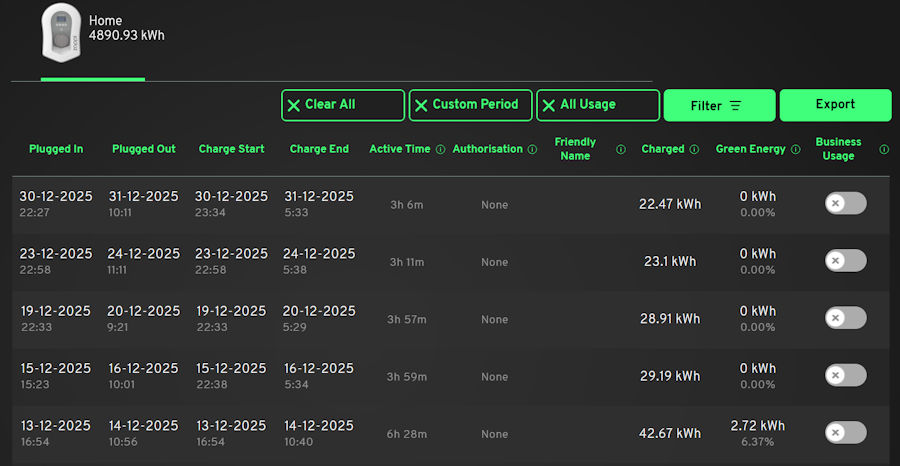
The Myenergi website allows you to export your charging history in a lot of detail. Of the 9.0MWh imported in 2025, 4891kWh was used to charge EVs but 102kWh of that came from solar. That equates to about 18,000 miles of driving for just £335 but, we also spent about £120 at public chargers.
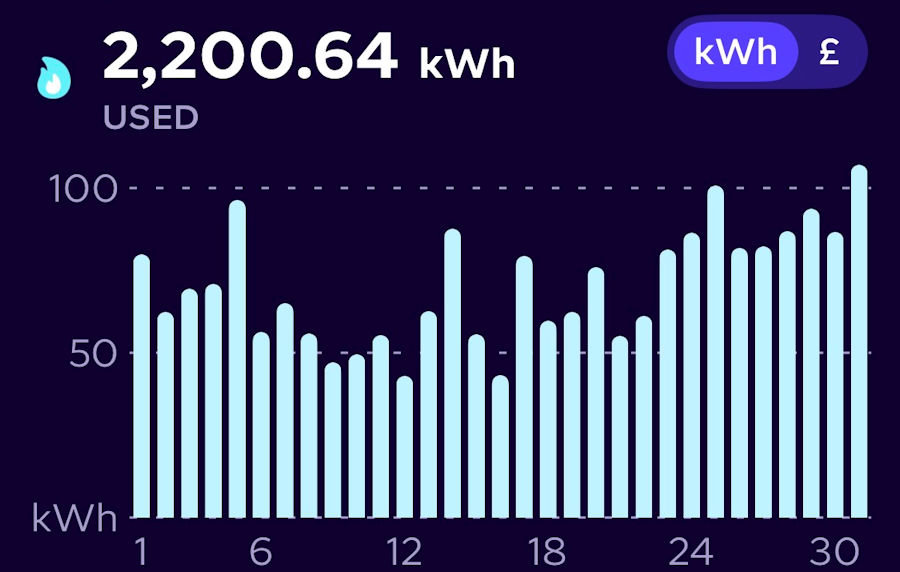
In 2025 our gas usage remained pretty much unchanged, despite adding a significant smart home extension and the cold weather. A big part of this is the much better insulation in the new build and the extra layers I have added in the loft space. I still have more insulation to install though.
We are on the Octopus Gas Tracker tariff and averaged 4.9p per kWh over the year, including standing charges.

Our (second) CUPRA Born V3 58kWh has now done 13,722 miles since we picked it up in April with 2,942 miles. It has been brilliant and the main car used by the four adults in our household. It is effortless to drive and has been driven down to Somerset several times without issue.
We are still looking to replace our first CUPRA Born with something a little bit larger and with a little bit more range. The Skoda Elroq Sportline 85 (77kWh) is currently our favourite, having test driven quite a few EVs.
2026 •
Jan •
Feb •
Mar •
Apr •
May
2025 •
Jan •
Feb •
Mar •
Apr •
May •
Jun •
Jul •
Aug •
Sep •
Oct •
Nov •
Dec
2024 •
2023 •
2022 •
2021 •
2020 •
2019 •
2011


