House Extension Solar System
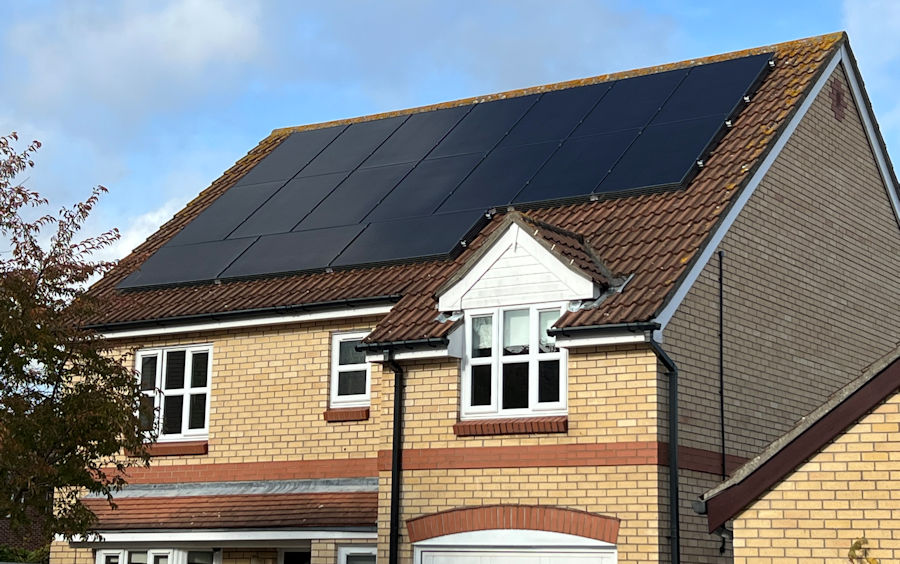
Our home is located in Suffolk (East Anglia, UK), one of the sunniest and driest parts of the UK. Our house faces 154° South (i.e. 27° to the East of South) and the main roof is inclined at 40°. This means it is pretty much ideally orientated for solar PV energy collection according to this orientation calculator. We undertook our first smart home solar installation project in October 2022 and have been really please with the benefits, savings and improvements to our quality of life.
In 2024 we started planning our smart home extension project and it made a lot of sense to consider adding solar panels to the new roof area that will project out from the rear of our home as this would extend the time we generate useful solar power by several hours.
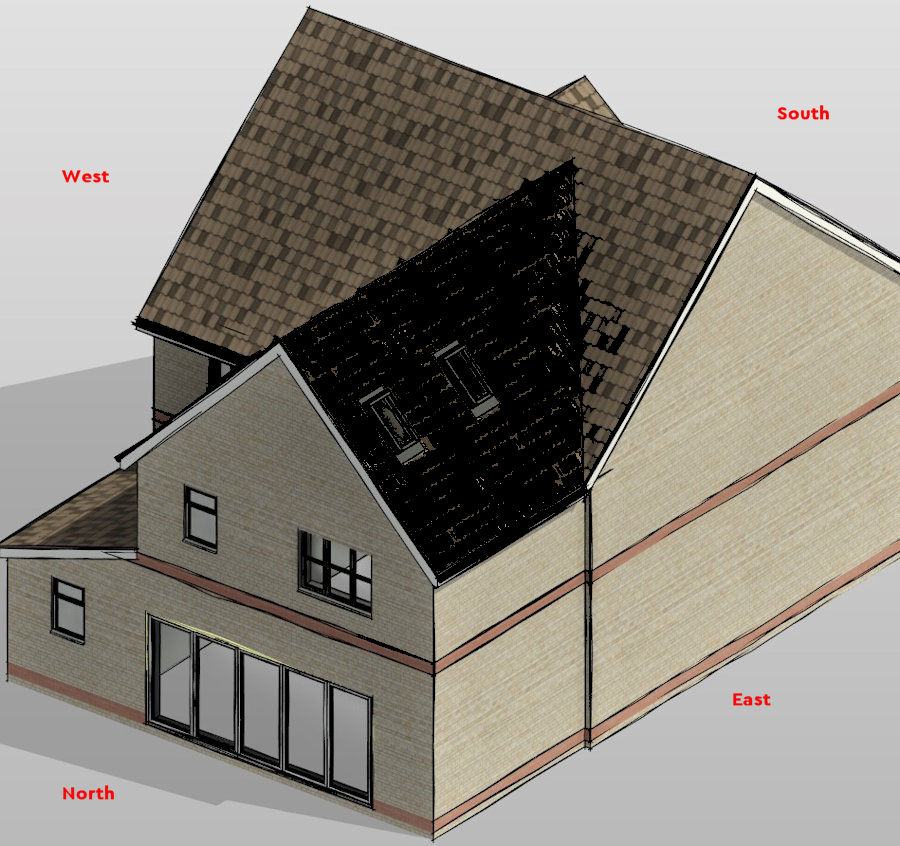
We decided to install "in roof solar panels" on the new extension roof. This gives a sleeker finish and works nicely with the planned Velux windows.
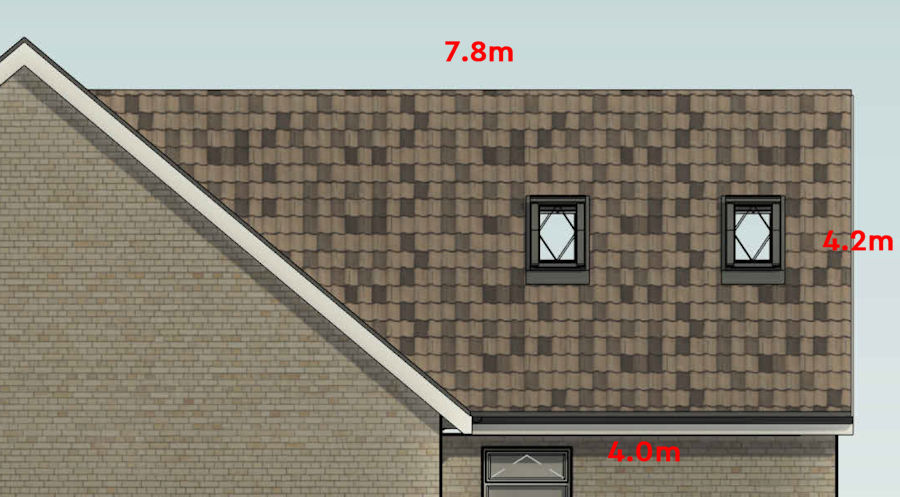
The East facing roof is big enough for the Velux window and 6 × 405W (2430W) solar panels. It will mean we start generating earlier in the day and generate more during day.
The West facing roof is the same size and it will mean we generate much later into the evening and more in the 'peak rate' period.
These solar panels will be partially shaded at times by the existing roof, so we plan to use Enphase microinverters again.
Installing a solar roof as the extension is built means we avoid the additional costs of fitting a standard roof, scaffolding, bird protection mesh, etc. The additional cost is fairly small and these panels will never experience the highest levels of sunlight, so they will not get excessively hot.
In Roof Solar Panels
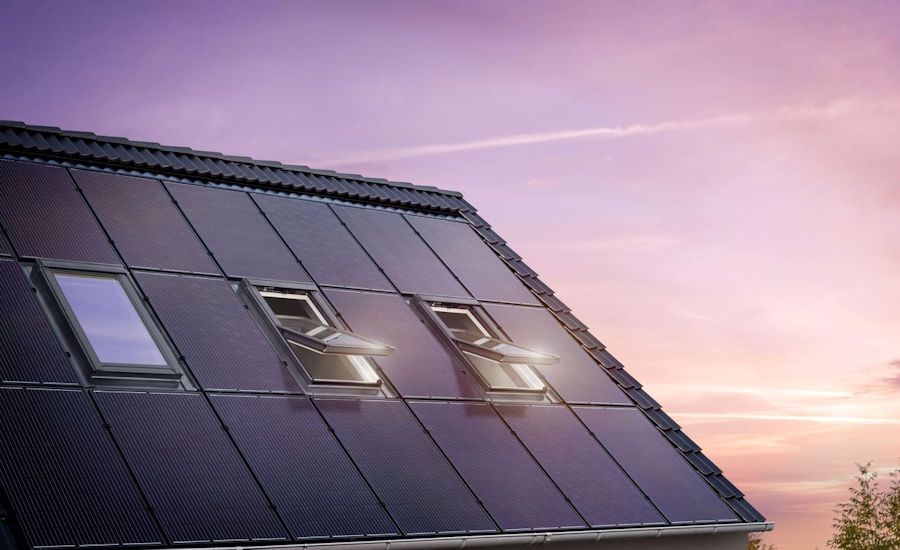
The main reasons for choosing an 'in roof' solution are the aesthetics and the ability to integrate seamlessly with the Velux windows.
We know that in roof solar panels can be less efficient as they get hotter but, they will not be South facing so this will be less of an issue. In roof solar panels are also more expensive to fit. With an in roof solar system, we do not require any bird protection mesh.
In-roof solar panels still require a 400mm border around them. One challenge with in roof solar installations can be finding panels that fit in landscape orientation.
GSE
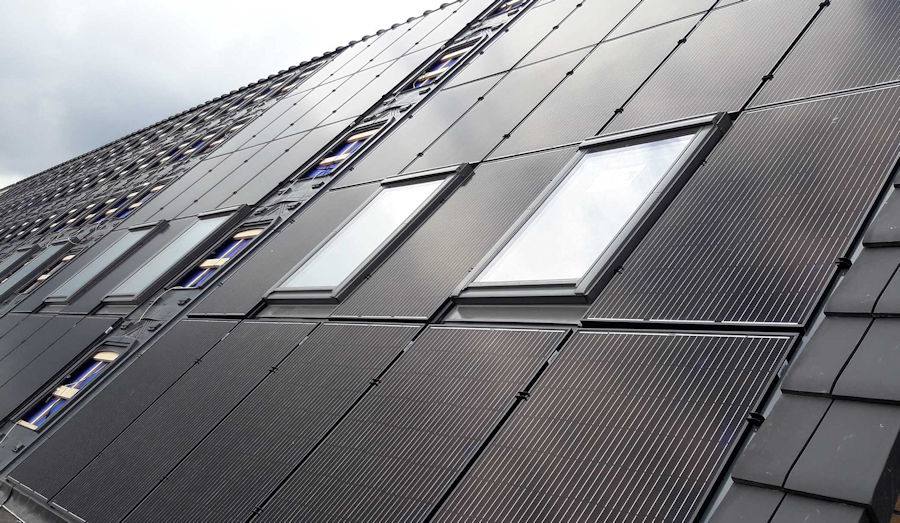
The GSE in-roof mounting system seems a popular choice. They use plastic trays but, they seem to work with many types and size of panels and they have also partnered with Velux. GSE have a list of panels that they certify to work with their mounting system.
With this system the panels are lifted slightly off the trays and trays work as a gully system for rain. This combined with the large raised holes (4 per panel) allows airflow and hence cooling.
Viridian
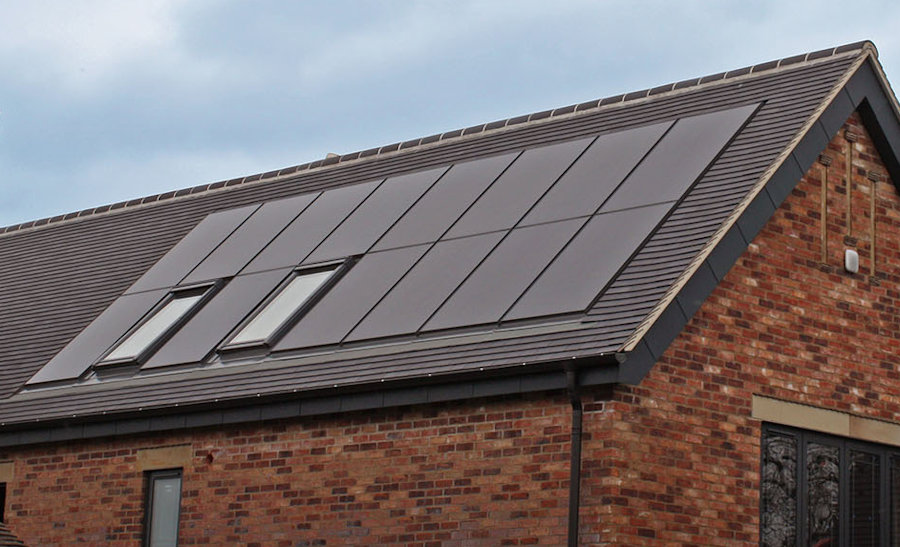
The Viridian in-roof mounting system seems to be very well regarded in the solar Facebook groups but it is more expensive. The Clearline Fusion modules fix directly to the roof structure.
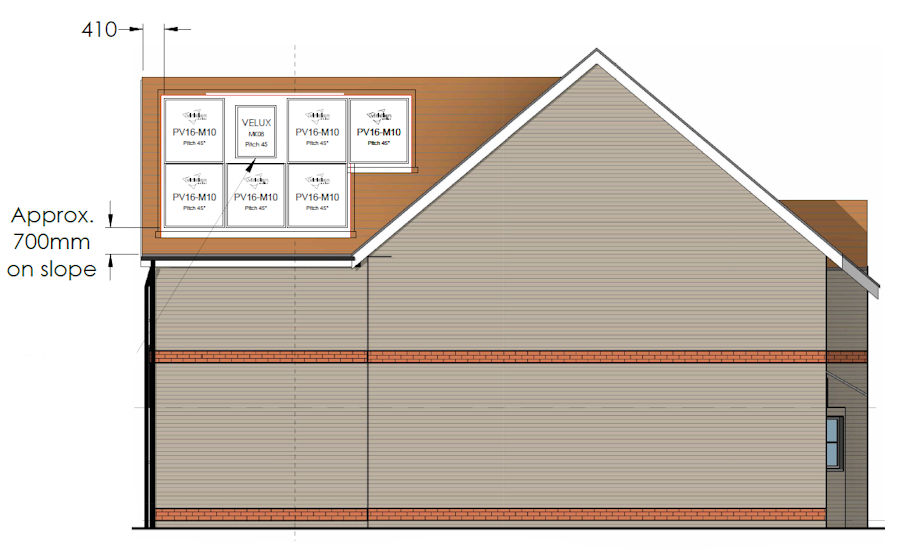
Viridian provided a design based upon six PV-16 405W solar panels and a single MK08 Velux window. Whilst the architects drawings had two windows on each side, this design works better in my view. This provides 2430W of panels on both roof aspects and with Enphase IQ8HC microinverters, each roof could deliver up to 2280W.
Velux Windows
The main challenge with our installation is the integration with the Velux windows. This requires very some specific flashing kits, to ensure the whole roof remains water tight. It means that the correct size Velux MK08 windows are installed in exactly the right location. We have gone for top-hinged Velux windows to ensure they don't encroach into the room when open. They can be configured to centre hinge mode for cleaning though.
Estimated Generation
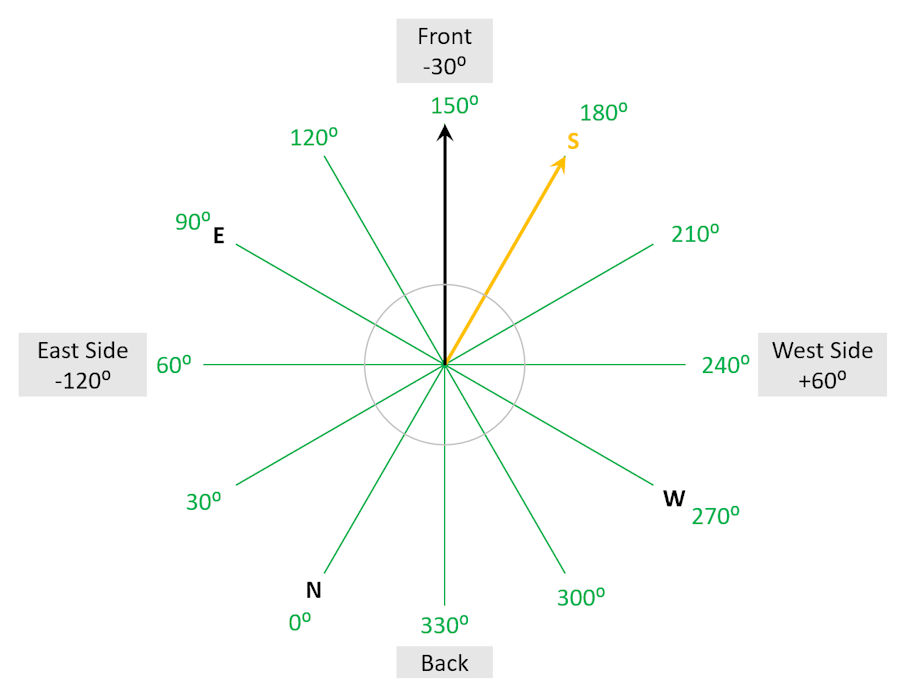
It is possible to predict the monthly energy generation for both aspects using the European Union PVGIS service. The numbers generated by this tool do not factor in the shading that occurs due to our existing roof though. For simplicity we have assumed the front of our house is 30° East of South. In reality it is 26°.
For now, I have assumed the peak output of the solar panels on each new roof aspect is 2400W and that each roof will slope at 45°.
In the middle of summer, the sun is rising from 60° at about 6am above our neighbours house, so it hits the East facing roof. The sun is high enough to hit both the East and West roof through most of the day. It sets to the West and hits the horizon at around 9pm and at 300°
In the middle of winter, I don't think the sun gets high enough to directly hit the East & West facing roof aspects during the day but, time will tell!
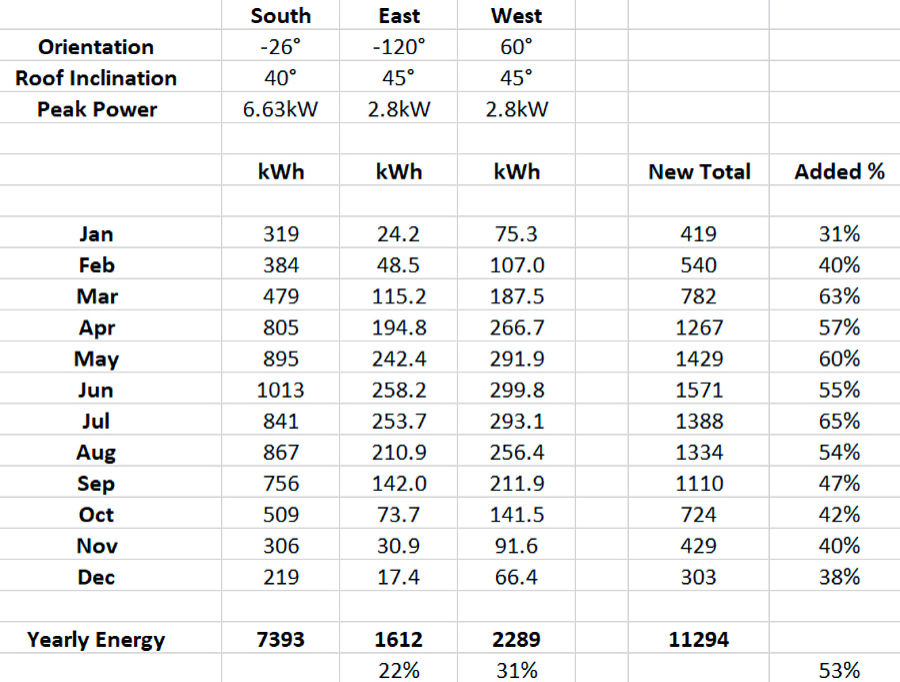
The PVGIS figures show that the new solar panels would add about 3900kWh per year. Our existing 6.63kW South facing roof generated 7400kWh in 2023.
The combined figure is 11,300kWh and about 53% more than we currently produce over a whole year. We generated 10.6MWh in 2025 (not a complete year with this added solar), so these estimates look a little high. They do not factor in the complex shading though.
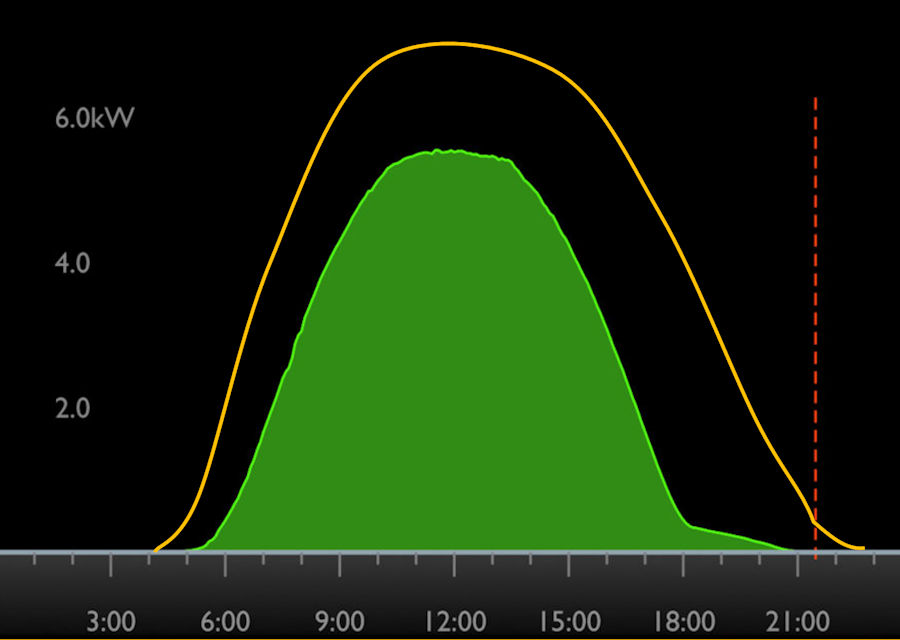
The additional solar panels will not just provide more peak power. They will widen our daily generation curve (this one is from July 2023), to start generating more power earlier in the day and to then continue generating more power much later into the day. This means more energy will generated each day and a lot more energy will be generated in the 'peak rate' evening period. The 'tail' currently captured at the end of each day will be filled out. In theory, we could produce more than 70kWh on a good day.
Export Limits & Approvals
Before this project was started we had a 6.63kW system with 6.0kW of Enphase microinverters and we rarely saw the peak generation exceed 5.8kW, though in (rare) ideal conditions we have observed 6.1kW. Given that our home typically uses 300-500W, we typically export a maximum of 5.4kW. Our additional solar generation would allow us to exceed 6.63kW though, so requested that our installer applied to get our export limit increased. We would still have added these extra solar panels, even if we didn't get a higher export limit though.
In early May 2025 we got a letter through from UK Power Networks saying that we now have approval to export up to 11.19kW 😎
Return On Investment
One big factor with the Return On Investment (ROI) of this planned addition to our solar system is that an in-roof system avoids the need to buy a new roof for our extension and then cover it up with solar panels. The ROI of a solar system that is not South facing and is also subject to shade is going to be much longer though. The 'payback period' with this addition to our smart home solar installation project is going to be much longer but, I don't care. The benefits and improved quality of life mean that the investment is easily justified.
I am mainly adding a solar roof to our extension to improve our quality of life. The additional solar energy generated means:
- We will be able to charge our CUPRA Born and other electric vehicle at a faster rate and in less time using solar energy. We should be able to regularly hit the 7.4kW limit of our Zappi smart EV charger. Our current tariff is a key factor in deciding to use solar power for EV charging but, there are tariffs where it makes good financial sense.
- We will export a LOT more solar energy and get paid a good price for it. In most months, our solar exports already cover our imported electricity, gas usage and all standing charges. This includes charging two EVs too.
- We will be able to run more appliances whenever we want. We very rarely hit the 5kW discharge limit of our Tesla Powerwall but with more solar panels this will not be an issue. Specifically, we will be able to use the cookers and induction hob using solar power well into the evening.
- The extra generation will easily cover the extra power required to run the air conditioning in the new extension & master bedroom.
More Battery Storage?
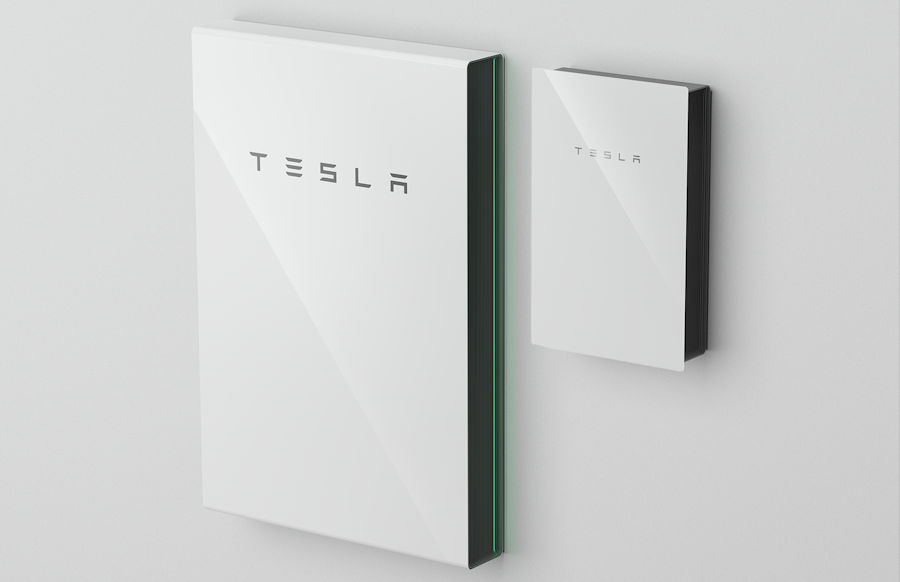
I looked at adding a second Tesla Powerwall to our system, to ensure some of the planned HVAC components can run on cheap rate electricity throughout the whole day. It would also mean we could run our home through longer power outages and the two Powerwalls would be able to handle house loads up to 10kW. Both would charge at 5kW too and take less than 3 hours to fully charge on cheap rate electricity.
Having worked through the numbers, a second Powerwall 2 simply can't be justified on financial grounds. Doubling our battery storage to handle a situation that very rarely occurs with our single Powerwall just doesn't make financial sense.
Enphase Microinverters
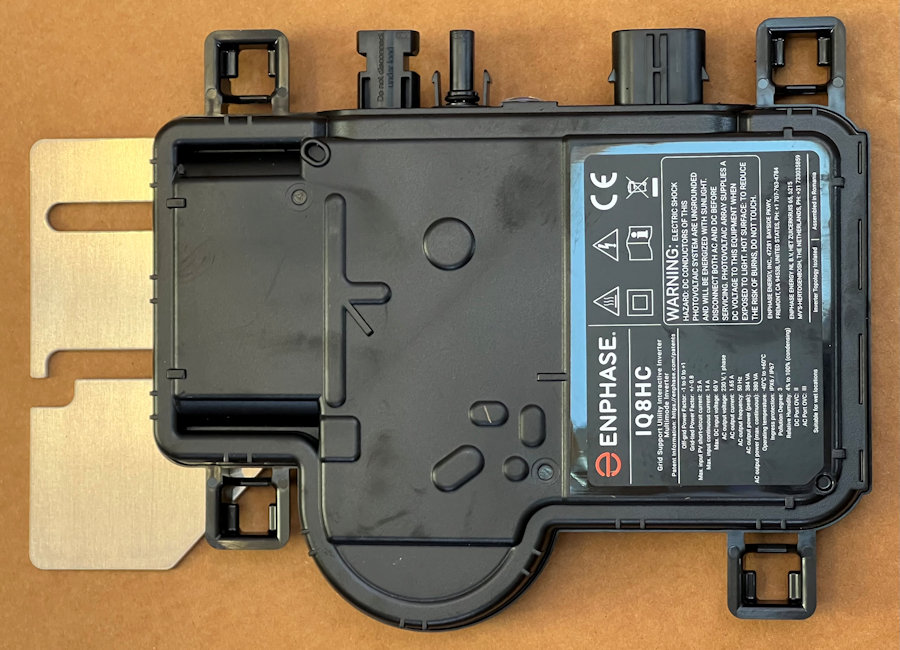
These Enphase IQ8HC microinverters fix underneath each panel and deliver 230V ac power from the roof. They are rated at 380W continuous power, which is perfect for the 405W Clearline Fusion panels. They ensure that we extract maximum power at all times, despite the complex shading that occurs on an East and West facing roof with a gable that points North and is behind the main roof to the South.
We have Enphase IQ7A microinverters on our South facing roof as part of our original smart home solar installation project and the performance has been exceptional.
The Installation
My installation was started on 12th May 2025 by Orton & Wenlock, a Colchester based company. Our electrician had already run a 6mm² and 10mm² earth bonding strap from the new roof down to our garage (near the Tesla Gateway). This means that all the cables for this solar installation are hidden and not ducted on external walls. From the front of our house, you cannot see the rear extension and from the rear garden, you can't get far enough away from the house to see the extension roof.
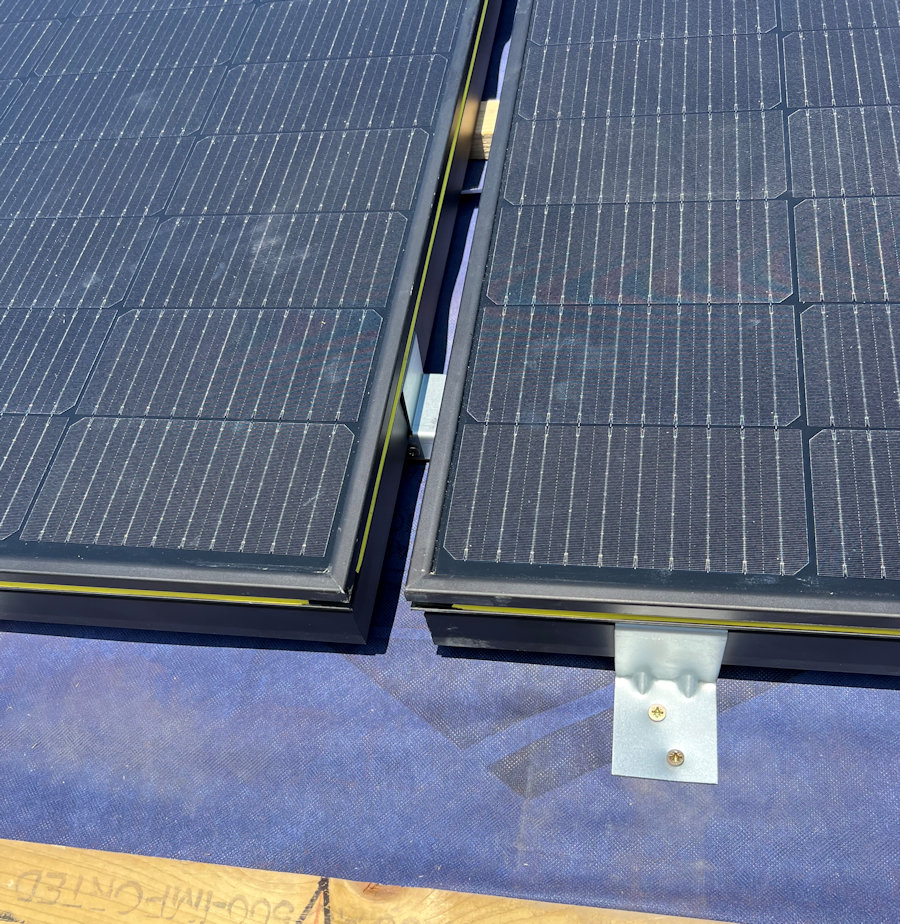
The Clearline Fusion solar panels are held in place by bespoke clips that align with the joists at the top and bottom. Different bespoke clips are also fixed to the battens and stop sideways movement.
The gaps between the panels are filled with a trim piece, to keep a smooth, flat profile.
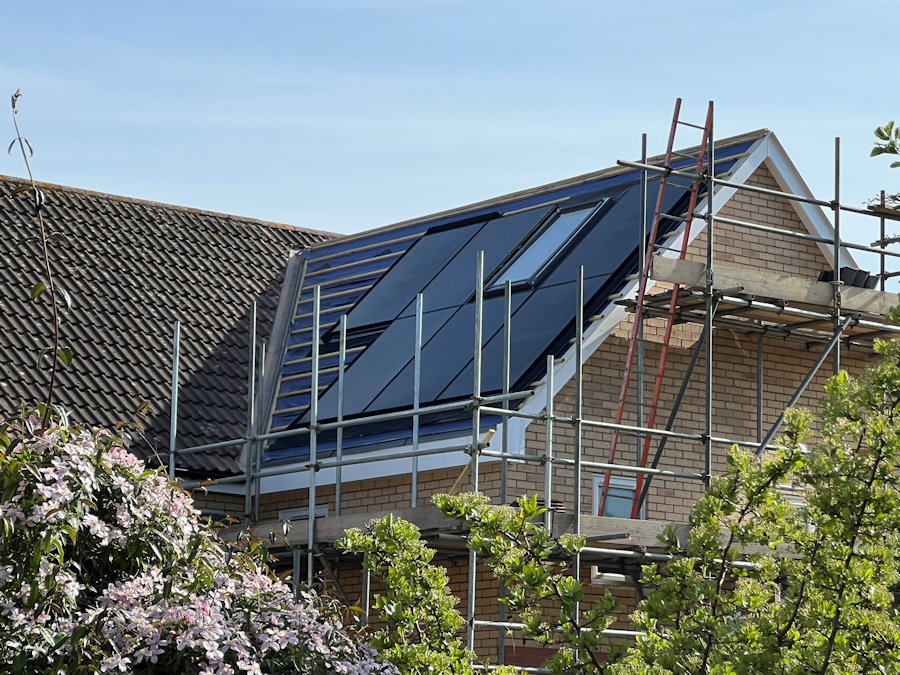
The East facing roof starts generating energy much earlier in the morning than our South facing roof. In May, all the panels appear to be in direct sunshine for most of the day.
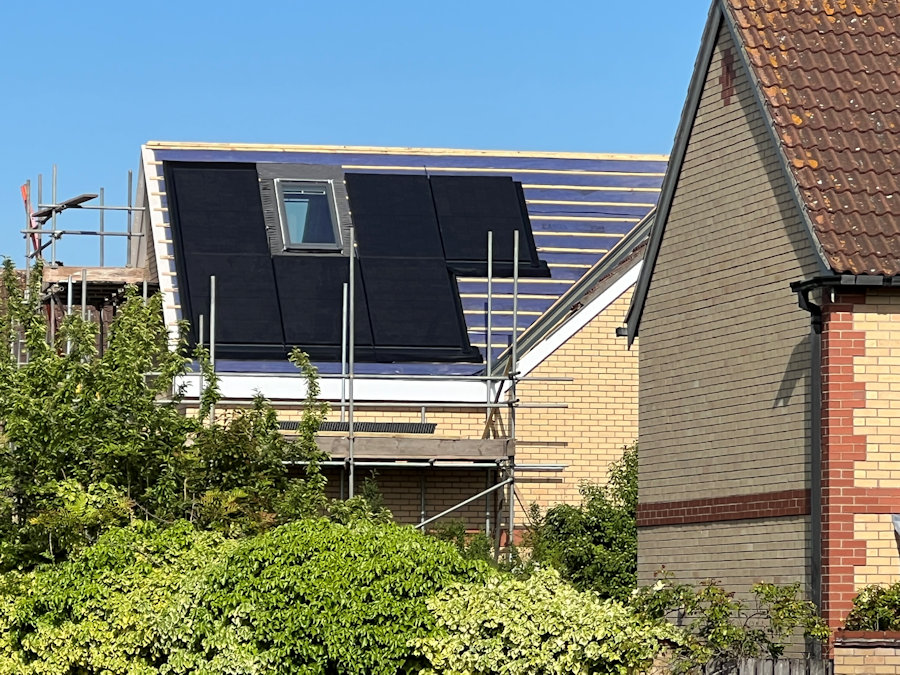
The West facing roof generates energy much later into the evening than our South facing roof. They have direct sunlight nearly two hours after the South facing panels have ceased generating useful power. In May, all the panels appear to be in direct sunshine for most of the day.
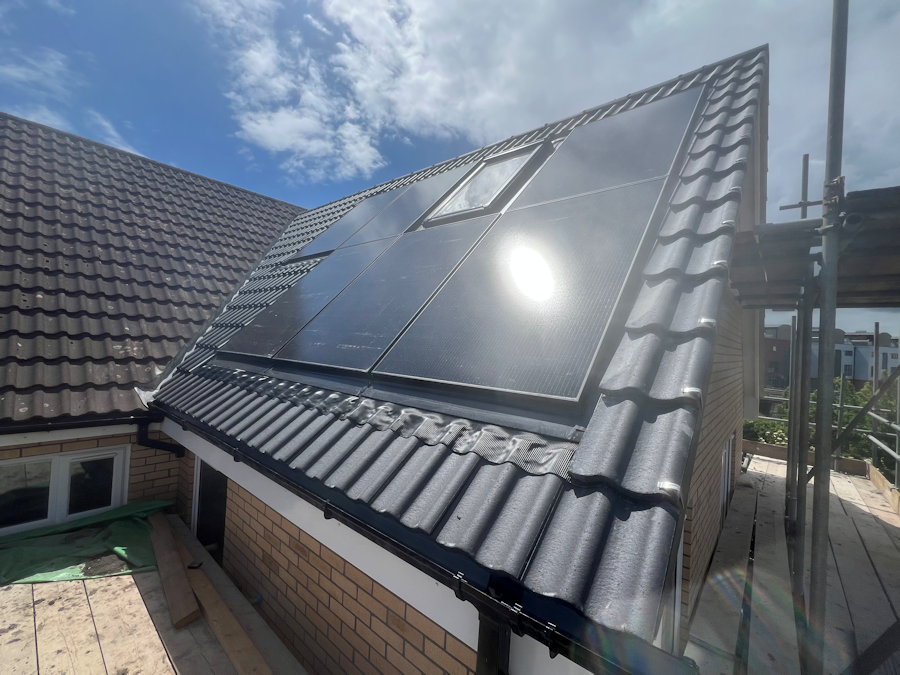
The Viridian system is tiled around once the panels and flashing kits have been installed.
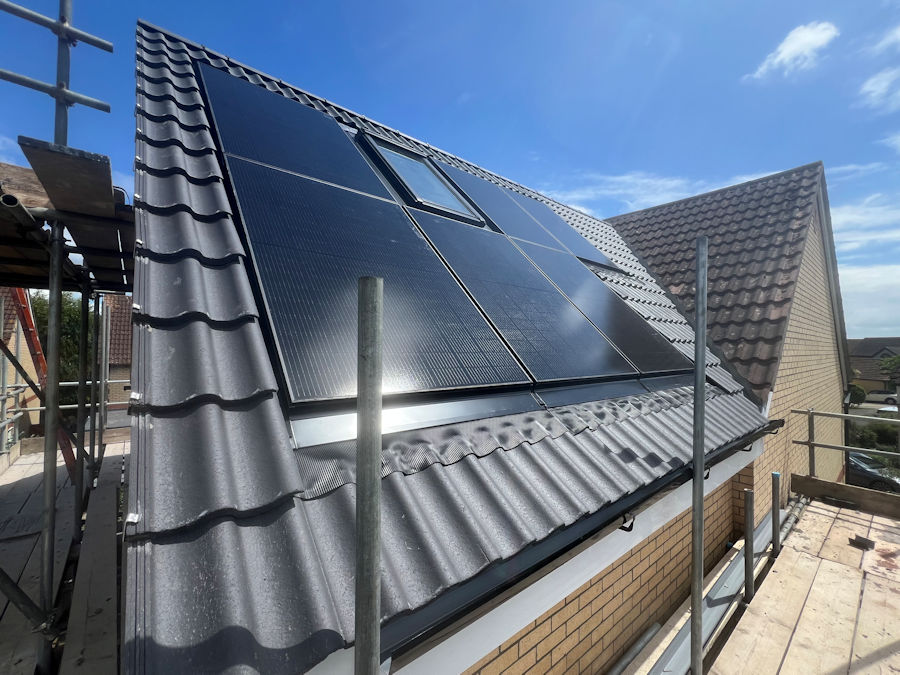
The Viridian system is tiled around once the panels and flashing kits have been installed.
Monitoring
I asked the installer to add the CT clamps to enable the new solar to be monitored separately from my previous solar installation.
Enphase
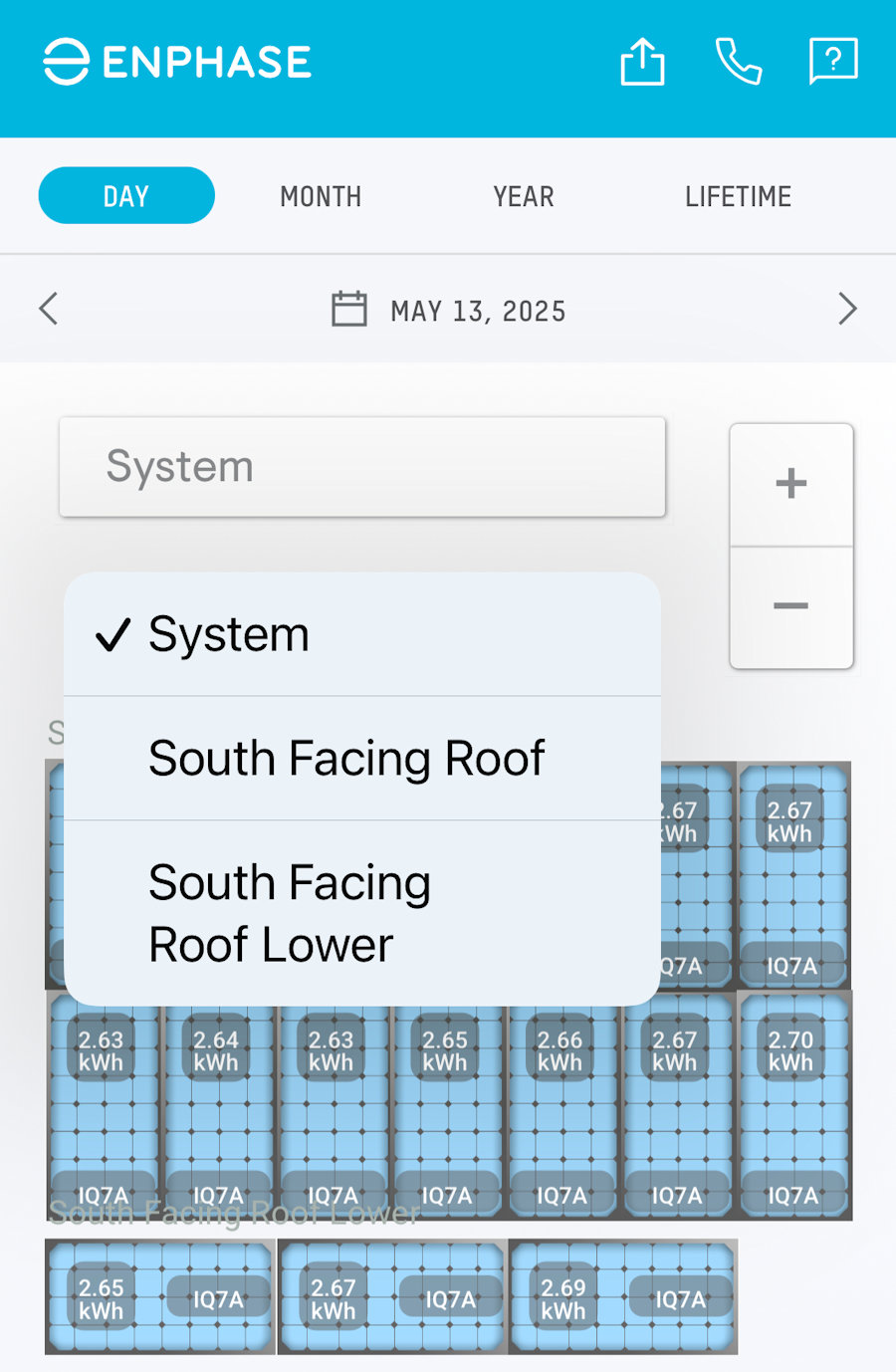
With Enphase microinverters you get individual panel monitoring and each installation may also be set up into sub-groups of panels. Within the Enphase Enlighten app microinverters are also grouped into 'strings' with a maximum limit. My 'System' has two parts currently, the main 'South Facing Roof' and the panels in portrait orientation grouped as 'South Facing Roof Lower'.
The lower panels see the sun a tiny bit later in the morning and the panel orientation makes no difference at all to the amount of energy generated.
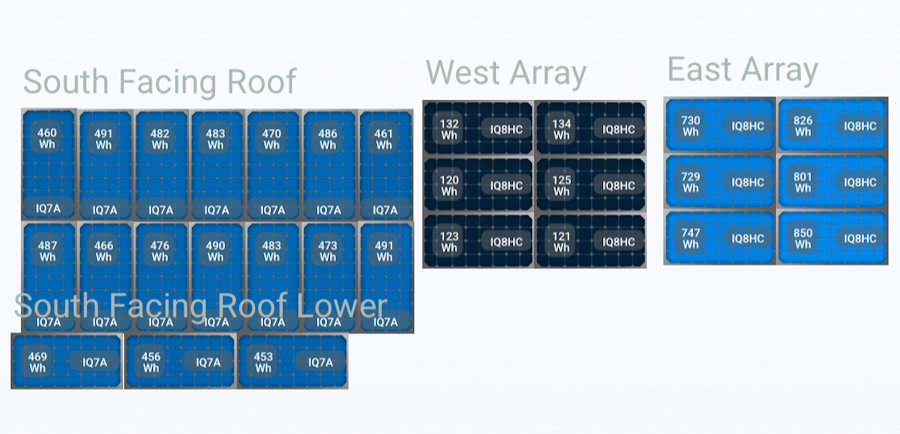
The app now shows each roof aspect and I can see how much each contributes to the generated power.
MyEnergi
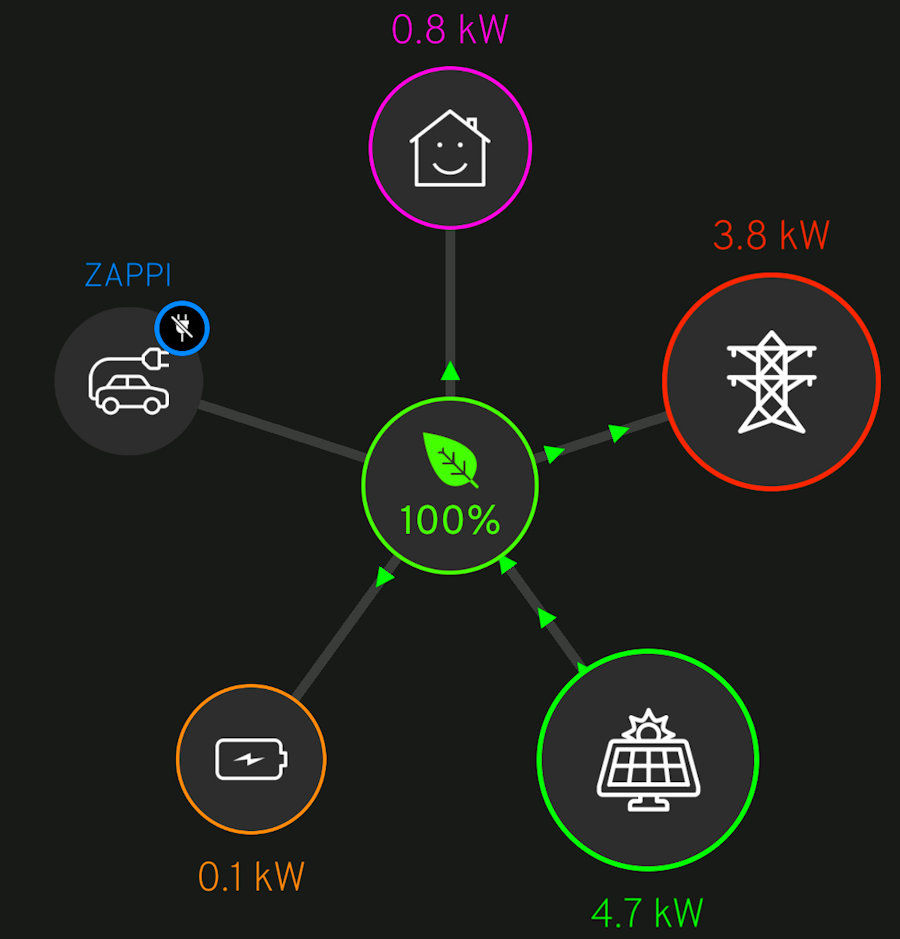
I've asked to installer to add another CT clamp to show both solar installations and to enable me to monitor and compare them. This is what the MyEnergi app view looked like before the extension install. The Zappi has only got three CT inputs (+ the EV charger internal input) and as you can see above they were all in use. The 'house' figure is actually calculated based on the other inputs.
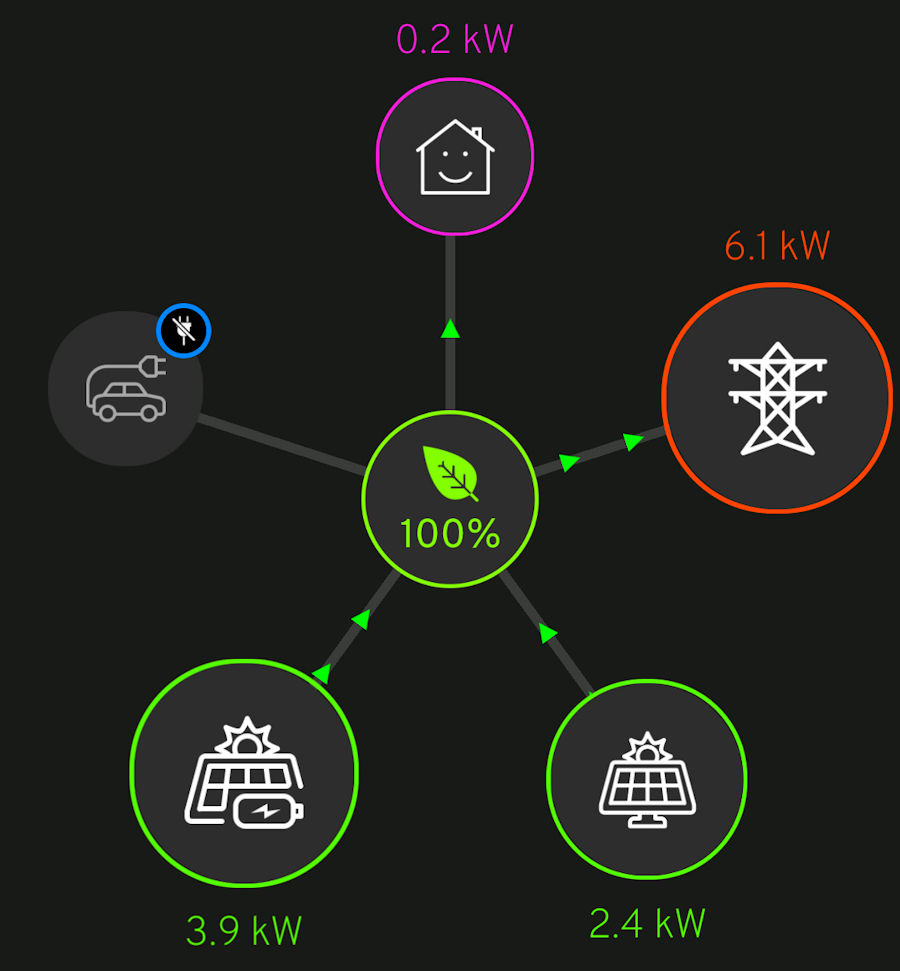
I was hoping to add another CT clamp to enable independent monitoring and data collection for both the old and the new installations but, this is not possible. As a work around, I moved the CT3 from the battery to the new solar system and this appeared to work when looking at the measured power level on the Zappi display. Annoyingly though, the app aggregates inputs of a similar type into one icon and associated graph. I also lose the ability to see what the battery is doing but, at least the Tesla app gives a view on this.
I ended up changing my first solar installation type to 'generation and battery' and this allows me to see what both solar systems are generating at any one time. I can only log the data for the new East + West solar system though. This will at least allow me to see how it is performing.
Tesla
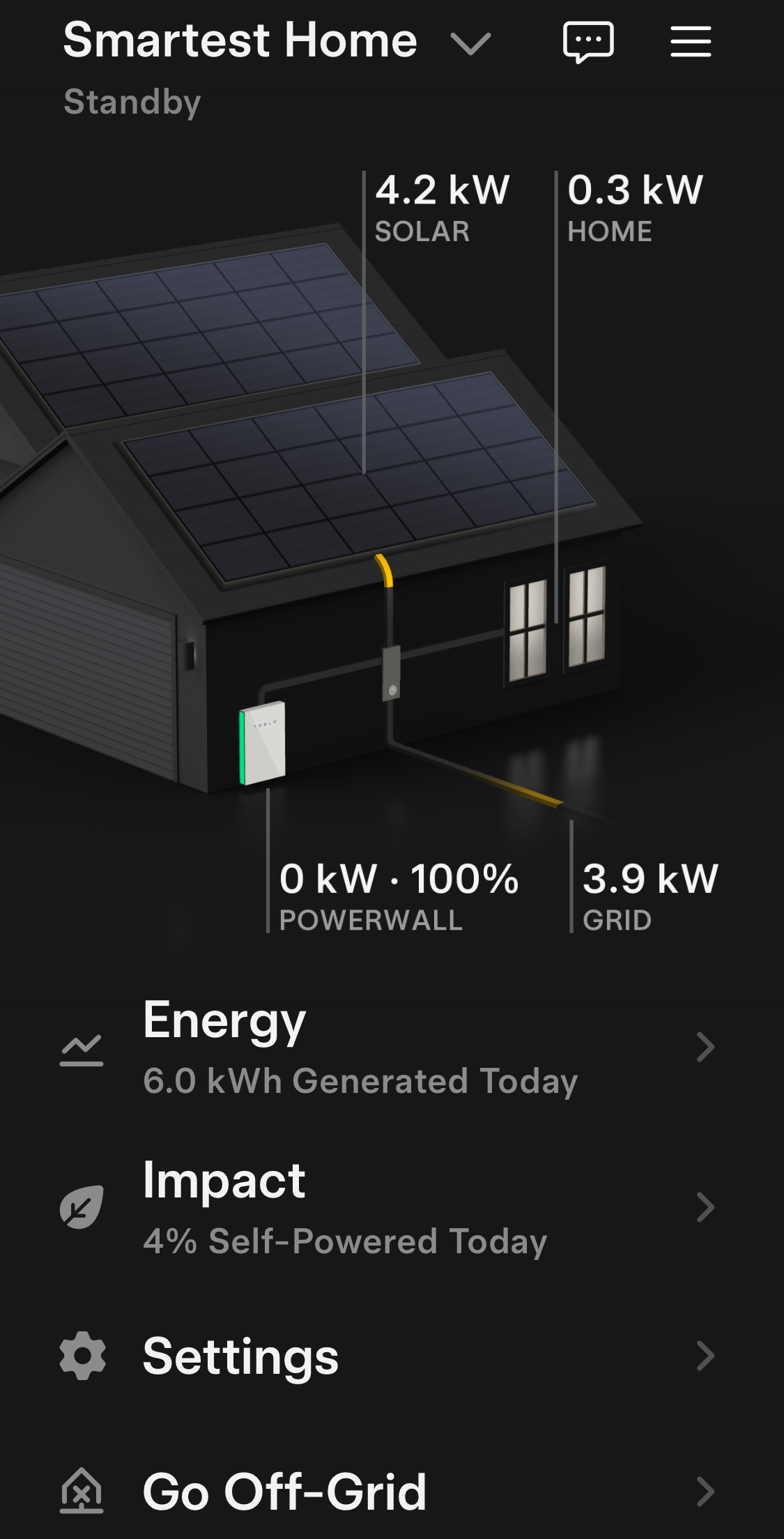
I also asked my installer to add another CT clamp to show both solar installations and to enable me to monitor and compare them. This is what the Tesla app view looked like before the extension install. The Tesla Gateway has 3 inputs but these are for a 3-phase system. To add another CT clamp would require a bespoke Tesla wireless clamp at a cost of £250 + installation + VAT. I passed on this and simply used the one CT clamp to measure the output of both solar systems, so the app view is unchanged but the total solar generation is much higher.
Performance
The extension roof solar went live on 15th May 2025. It was not the sunniest of days but the E + W solar panels are generating about 70% of what the South facing roof does during the day. Generation peaked at 9.95kW and export at 9.1kW.
In the morning, the whole system is generating around 2kW by 06:30 and generating over 7kW before 09:00. It gets close to 8kW through the early morning.
The highest generation I've ever seen from my South roof alone is 46.4kWh. The best so far on the extension roof is 26.4kWh (30/06/2025). The highest combined generation is 71.4kWh (30/06/2025).
East v West v South
The great thing about microinverters is that you can see exactly what each panel has produced, so it is easy to compared panel performance on different roof aspects. The panels on the south roof are 390W with 365W IQ7A microinverters. The panels on the East and West roof are 405W with 380W IQ8HC microinverters.
The solar panels on the East roof have a advantage (over the West facing panels) because the house faces 27° East of South. On a fairly average day for sunshine with my South roof generating 35.6kW (the best I've seen is 46.4kWh). Each south facing panel averaged 2.09kWh, the East facing panels averaged 1.96kWh and the West panels averaged 1.74kWh. Much less variation than I expected. Obviously, the time at which they generated was very different. The East panels were ahead of the South panels until about 4pm. E+W was 22.2kWh and total generation was 57.4kWh.
Summary
I've got three quotes to do this work and they varied by about £3000. I did not chose the cheapest supplier because they didn't respond to my follow up questions. I have also not used Greenscape Energy Ltd again, because they were slower to respond and they didn't give me the same level of confidence this time. They were also the most expensive quote. This was a shame because I was really impressed with them when they installed our smart home solar installation project. I am using Orton & Wenlock, a new (to me) local supplier.
It is fair to say that in-roof solar panels, especially ones with microinverters are a more expensive than the more traditional on-roof solution but, I'm not taking this approach for financial reasons alone. When you factor in all the other elements and savings (roof tiles, bird protection mesh, etc.), the difference is not that big. It is a much more aesthetically pleasing solution for our new extension and it extends our solar generation capability, to future-proof our home a little bit more.
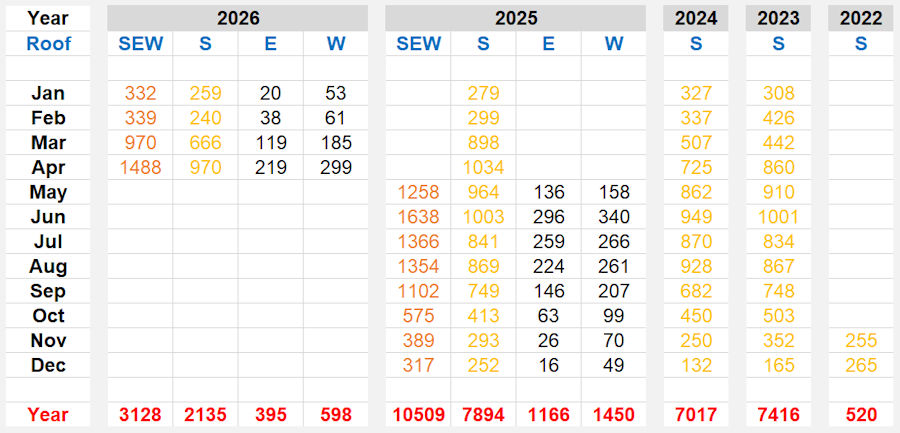
This is our generation history, showing the impact of the new extension solar.


